

Is New York City worth it? Yes. But only if you aren’t a sucker.
Most people plan their NYC trip based on pretty pictures and “top 10” lists written by people who haven’t stepped foot on a subway in a decade. They book a “cheap” hotel in New Jersey, land at the wrong airport during rush hour, and spend half their vacation staring at the back of a taxi driver’s head in Midtown traffic.
New York doesn’t care about your feelings or your itinerary. It’s a loud, expensive, high-friction environment. If you don’t know the difference between the “tourist version” and the “reality version” of these comparisons, you’ll leave the city broke and frustrated. This guide is the filter. Read it, or don’t complain when you’ve spent $100 on an Uber that moved slower than a guy on a skateboard.
THE SURVIVAL TIP: THE EMPTY SUBWAY CAR
If you are on a subway platform in the middle of July, the station is 100°F [38°C], and a train pulls in with one completely empty car while the others are packed—do not get in. I don’t care how tired you are. That car is empty because the AC is broken, there is a biological hazard on the floor, or a smell so foul it will haunt your clothes for a week. Follow the crowd; they know something you don’t.
JFK vs. Newark vs. LGA: Which Airport is Actually Better?
The biggest mistake starts before you even land. People choose their flight based on a $50 price difference without calculating the “get to the city” tax.
JFK (John F. Kennedy)
JFK is the heavy hitter. It’s reliable but massive. The AirTrain costs $8.50 [as of 2026] just to leave the airport grounds and get to the subway. Then you pay another $2.90 for the A or E train.
- The Reality: If you have three suitcases, don’t take the subway. The elevators at the Chambers St or Broadway Junction transfers are either broken or smell like a sewer. You’ll be dragging 50lbs [23kg] of gear up metal stairs.
- The Uber/Lyft Factor: Expect to pay $80–$110 to get to Manhattan. If you land at 4 PM on a Friday, stay at the airport and have a coffee. You’ll be sitting in the Van Wyck Expressway crawl for two hours otherwise.
EWR (Newark, New Jersey)
I actually like Newark, but only if you’re staying on the West Side of Manhattan.
- The Trap: It’s in another state. You take the NJ Transit train to Penn Station. It’s fast (about 25 minutes), but Penn Station is a chaotic pit of confusion. If your hotel is in Brooklyn, landing in Newark is a logistical nightmare. You’ll spend $120 on an Uber just to cross the bridges.
LGA (LaGuardia)
It used to be a joke; now it’s the best-looking airport in the country. It’s the closest to Midtown.
- The Catch: No subway. You have to take the M60 bus or a cab. If you’re staying in Queens or Upper Manhattan, LGA is the winner. If you’re a “train only” person, you’ll hate the bus transfer.
Staying in Long Island City vs. Jersey City: The “Cheap” Hotel Comparison
Everyone wants to save money on hotels. NYC hotels are tiny, old, and expensive. So, you look across the river.
The New Jersey Trap (Jersey City/Hoboken)
The hotels in Jersey City look great and cost 30% less. Here is what they don’t tell you: The PATH train is not the Subway. Your 7-day Unlimited MetroCard or OMNY fare capping does not work on the PATH. You will pay an extra $2.75 every single time you want to cross into Manhattan. If you go back to the hotel to drop off bags and head back out, that’s $11 per person, per day. Plus, the PATH runs like garbage late at night and on weekends. You’ll be waiting 20 minutes on a cold platform in Jersey while your friends are already at the bar in the Village.
Long Island City (Queens)
This is the real pro move. LIC is one subway stop from Manhattan. You can stay at a brand-new hotel for half the price of a Midtown closet.
- Why it wins: The 7, N, and W trains run constantly. You stay within the MTA system, so your OMNY transfers are free. You get a view of the skyline without the Times Square noise. It’s utility over hype.
OMNY vs. MetroCard: How to Pay for the Subway in 2026
The yellow MetroCard is a relic. Stop looking for the vending machines.
OMNY (One Metro New York) is the tap-to-pay system. You use your phone or a contactless credit card.
- The Fare Cap: This is the comparison that matters. If you use the same device/card, after your 12th ride in a week (starting Monday), every ride after that is free.
- The Mistake: Do not switch between your Apple Watch and your physical card. The system sees them as different people. Pick one method and stick to it all week to trigger the cap.
The Subway vs. Uber: Which is Faster to Midtown?
If you are traveling between 8 AM and 10 AM, or 4 PM and 7 PM, the Uber is a scam. I’ve seen people pay $45 to go 10 blocks in a Lyft because they didn’t want to walk in the rain. They sat in that car for 35 minutes. I walked it in 12.
The Subway is the great equalizer. It’s dirty, it’s loud, and the humidity in the stations will make your hair look like a dandelion, but it moves.
- The Grid: Manhattan is a grid. Traffic moves East-West (Crosstown) at the speed of a tired turtle. Always take the subway for North-South travel. For East-West, just walk. The “Crosstown Bus” is just a parking lot with seats.
The Money Talk: What You’ll Actually Spend
Don’t look at the menu price. That’s a lie. In NYC, you need to add the “Life Tax.”
| Item | Est. Cost (USD) | The Verdict |
| Slice of Pizza | $1.50 – $5.00 | Anything over $5 better have gold flakes on it. Stick to the $1.50 joints for the real experience. |
| Mid-range Dinner | $40 – $70 per person | This includes one drink. Don’t forget the 8.875% tax. |
| Cocktail at a Bar | $18 – $24 | Yeah, it’s a robbery. Pre-game at a bodega or find a Happy Hour. |
| Yellow Cab (Min) | $15.00 | Even for a 5-minute drive, with the surcharges, this is the floor. |
The Tip Reality: If you sit down and someone brings you water, you tip. 20% is the baseline. 22% is standard. If you tip 15%, the server will think you hated the food or you’re from 1995. It sucks, but that’s the cost of entry here.
Summit One Vanderbilt vs. Top of the Rock: The View Comparison
You only need to go up one skyscraper. Don’t waste three sunsets on observation decks.
- Summit One Vanderbilt: This is for the “content creators.” It’s full of mirrors, silver balls, and people taking selfies. It’s over-stimulating and crowded. But the view of the Chrysler Building is unbeatable.
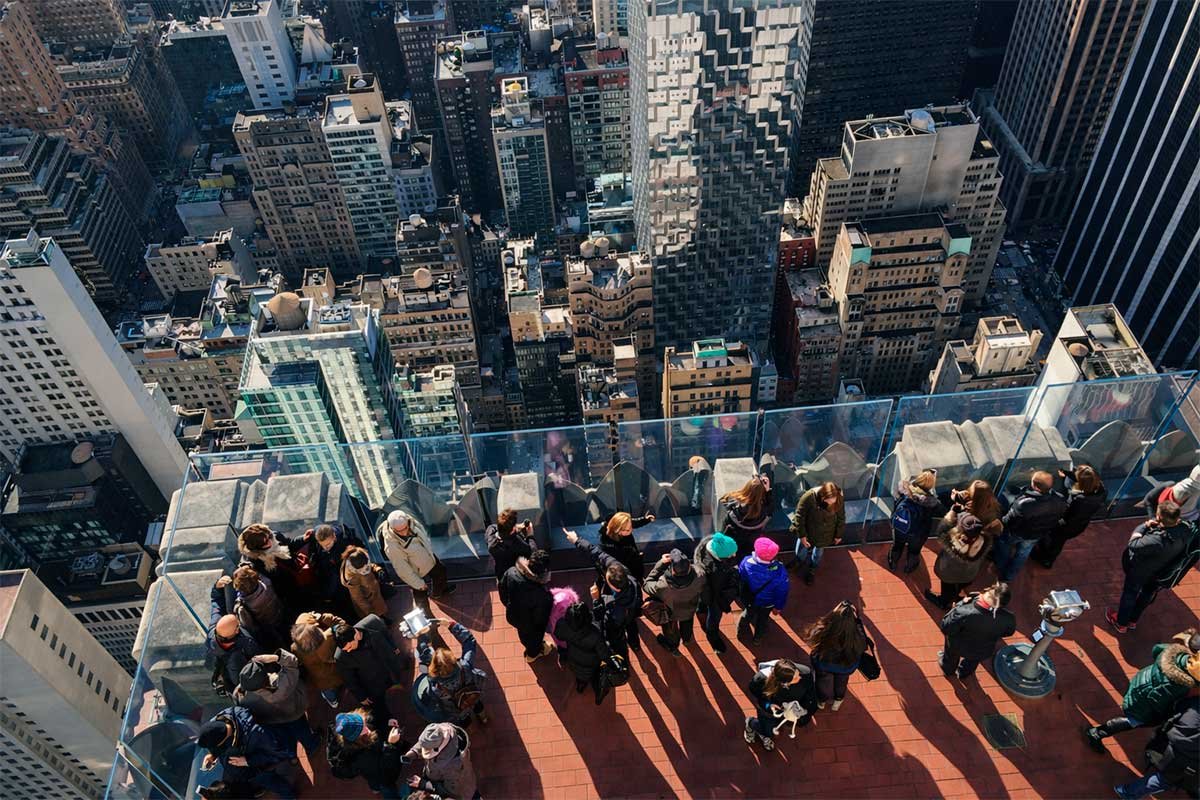
- Top of the Rock: This is the classic. Why? Because you can actually see the Empire State Building from it. If you go to the Empire State Building, you can’t see the Empire State Building. Logic.
- The Edge: It’s a triangular slab hanging off a building in Hudson Yards. It’s windy and feels a bit sterile. Skip it unless you really love heights.
The Free Hack: Take the Staten Island Ferry. It’s free. You get a beer at the terminal, stand on the deck, and sail right past the Statue of Liberty. You don’t need to pay $30 to stand on Liberty Island and look at the copper hem of her dress. See it from the water and keep your money.
The Logistics of the “Bodega”
A Bodega is not a convenience store. It’s a neighborhood anchor.
- The Order: Get a Bacon, Egg, and Cheese (BEC) on a roll. It should cost about $6. If they try to charge you $12, you’re in a “boutique” deli—get out.
- The Cat: If there is a cat sitting on a stack of beer cases, that’s the health inspector. He’s doing a great job. Leave him alone.
Play the City or Let it Play You: Your Final Strategy
New York is for people who can handle a bit of chaos in exchange for the best energy on the planet. If you want a “sanitized” vacation where everything is predictable and quiet, go to a resort in Florida.
If you want to do NYC right: Land at JFK, take the LIRR to Penn Station (it’s faster than the subway), stay in Long Island City, use OMNY for everything, and never, ever eat at a restaurant that has a picture of the food on a sign outside.
Should you skip the comparisons and just wing it? Only if you have a bank account you’re trying to empty and a lot of patience for standing on street corners looking at Google Maps.
NYC is a game of strategy. Play to win.